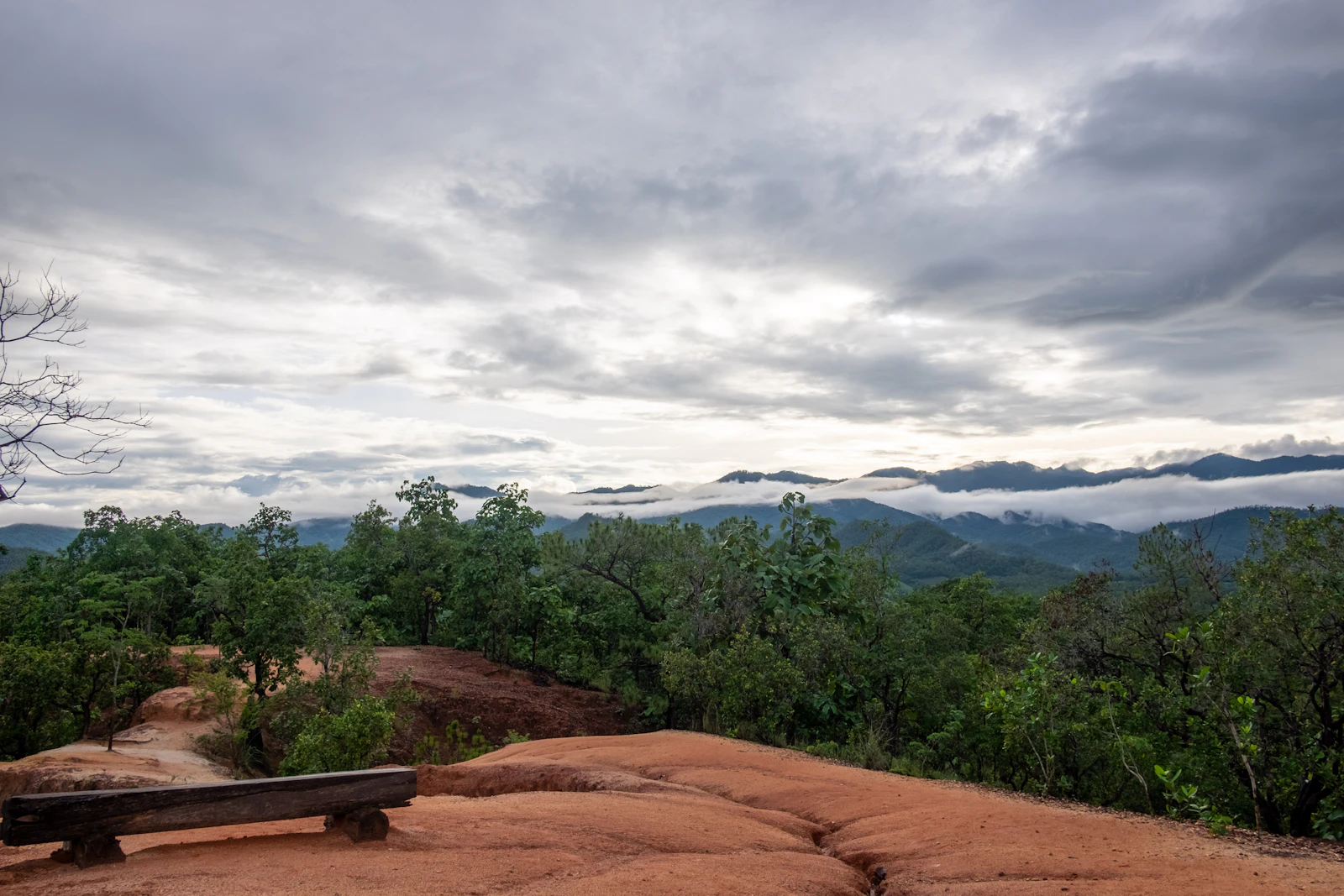
Pai is a small valley town, and most of what is worth doing sits outside it. This guide ranks the main sights (Pai Canyon, the waterfalls, Yun Lai Viewpoint, the hot springs and the night market) by how much they are worth your time, what they cost and which season they suit. Use it to decide what to prioritise if you only have a day or two, and when to skip a stop altogether.
How much time Pai actually needs
The town takes about 15 minutes to walk end to end, but the sights are spread across the surrounding valleys. Pai Canyon, a waterfall, a viewpoint and the hot springs fit into one to two full days if you have your own transport. A third day only makes sense if you want to slow down, ride the back roads or work from a cafe.
If you have only 24 to 48 hours, put these first:
- Pai Canyon in the late afternoon, free and close to town.
- Yun Lai Viewpoint early in the morning, if the air is clear.
- Mo Paeng Waterfall for a swim, but only in or just after the rainy season.
The Walking Street night market is the easy evening plan, so it needs no planning at all. If you want these stops laid out hour by hour, see our Pai itinerary for 2, 3 and 5 days.
Pai Canyon: free, close and the busiest at sunset
Pai Canyon (Kong Lan) is a network of narrow sandstone ridges a short ride from town. Entry is free, and a paved stair trail leads up from the car park, where small stalls sell drinks and snacks.

Treat it as a cliff walk, not a casual viewpoint. The ridges are narrow, the drops on both sides are real, and you should not expect safety barriers. Wear shoes with grip, not flip-flops, and keep children close.
The catch is timing. Sunset is the most popular slot, and one local guide puts the crowd peak at roughly 17:30 to 18:30 in the busy season. Arriving about 45 minutes before sunset gets you better light and a parking space, and it means you are not scrambling down in the dark.
Good choice if you want an easy, free highlight on your first afternoon. Skip it if the air is thick with smoke, because the views are the whole point.
Do not confuse it with the Chiang Mai Grand Canyon, a separate flooded quarry and water park near Chiang Mai city.
The waterfalls: great in the rainy season, patchy in the dry
This is where many first-timers are disappointed. Pai’s waterfalls depend on rain, and outside the wet months (roughly June to October) the flow can drop a lot. Check recent photos or ask at your accommodation before riding out.
Mo Paeng
Mo Paeng is about 9 to 12 km from town, depending on the source, and it is the easiest one to reach. It is a series of pools and smaller falls with smooth rock slides, and parking is a short walk from the water. Most current guides say a fee has applied since 2021, around 100 baht for foreigners, although one rental-operator guide says the gate is often unmanned. Do not rely on older posts that call it free.
Worth it if you want a cheap swim and a rock slide after a hot day. Be careful: wet rock is slippery, and there are no lifeguards.
Pam Bok
Pam Bok is a narrow, cooler gorge with a deep pool and a ledge people jump from. It sits on the same road as the Pai Land Split, so the two combine easily. Fees are reported at around 200 baht for foreigners, though sources disagree (one writer mentions 400 baht), so bring cash and ask before you pay. Check the water depth yourself, because levels change with the season.
Skip it if you are visiting in the dry months and are mainly after a dramatic waterfall. Mae Yen is a longer hike to a more remote fall, and it suits you only if you want a half day on foot.
Yun Lai Viewpoint and other lookouts
Yun Lai sits in the hills close to Santichon Chinese Village, about 15 minutes from town by scooter. The usual reported entry fee is 20 baht, and there is a small cafe where drinks and snacks are extra. It is small and a bit commercial, with a photo area, a souvenir shop and a lawn, but the valley view is good.
The reason to go is sunrise, when mist can sit in the valley below. In smoke season or on a cloudy morning, you will get none of that, and the early start is not worth it.
Yun Lai or Pai Canyon?
| Pai Canyon | Yun Lai Viewpoint | |
|---|---|---|
| Cost | Free | About 20 baht (reported) |
| Best time | Late afternoon to sunset | Sunrise |
| Crowds | Heavy at sunset | Moderate, mostly early |
| Main appeal | Walking the ridges | Wide valley view, mist |
| Main risk | Unfenced drops | Early ride in cool, dark conditions |
If you only do one, pick the canyon. If you are staying more than two nights and have the energy for a sunrise, add Yun Lai. The White Buddha on the hill above town (Wat Phra That Mae Yen) is a free, easy sunset alternative if the canyon is packed.
Hot springs and the Walking Street night market
Tha Pai Hot Spring
Tha Pai sits inside a protected park area south of town. Stepped mineral pools cool from very hot at the source to comfortable bathing temperatures, and the upper pools are hot enough that you can boil an egg. It suits cool-season mornings, not hot afternoons.
Fees are inconsistent across sources. Most recent guides put the foreigner price at around 300 baht, including a national park fee, while some reviewers report 200 baht. Cards are often not accepted, so carry cash. Sai Ngam, the other hot spring in the area, is a resort-run option and charges separately.
Worth it if you are visiting between November and February and want a quiet soak. Skip it if you are short on time, since it is the easiest stop to drop.
Walking Street
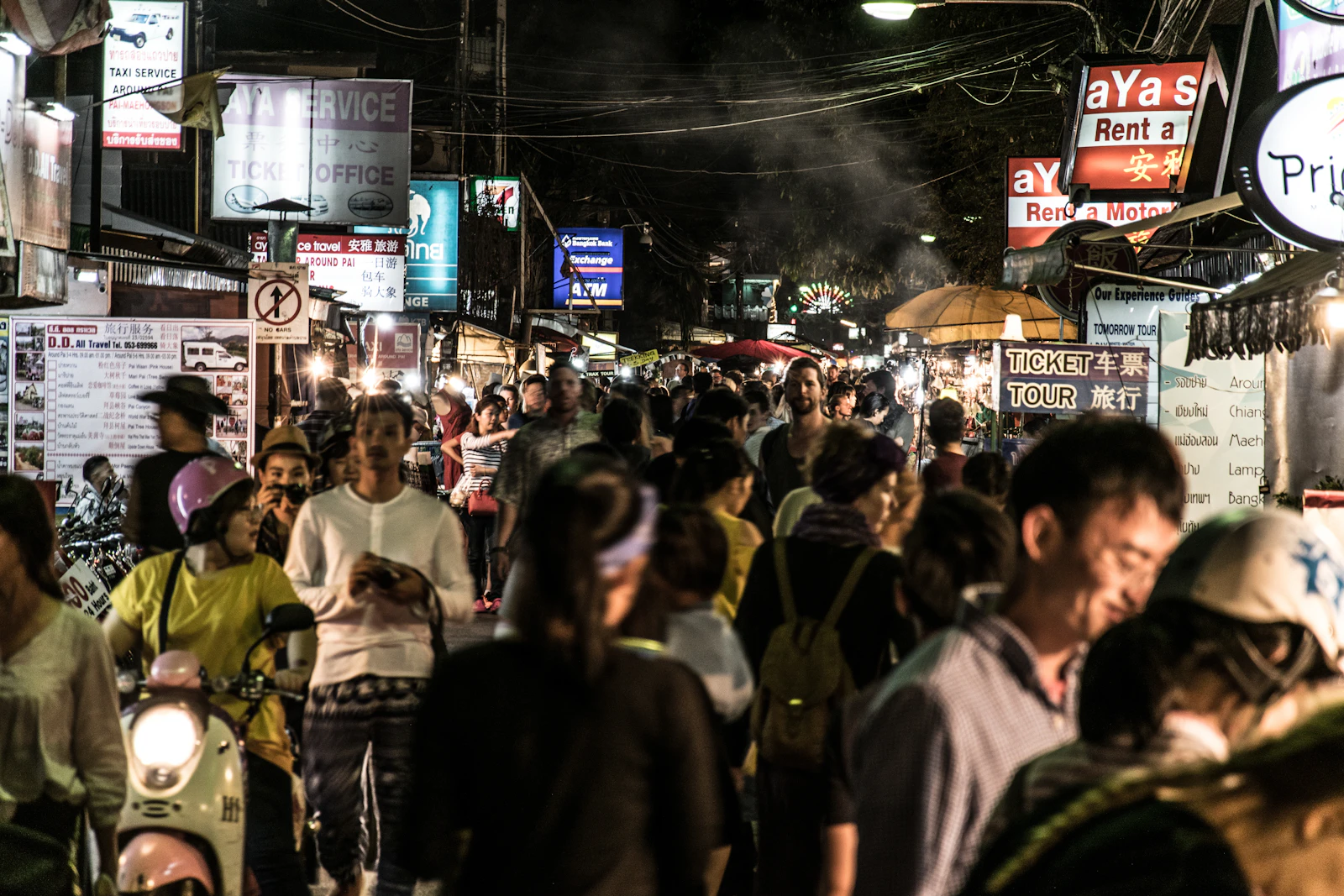
The night market runs along the main strip each evening. It is the low-effort option: street food, live music and cafes, with meals commonly priced around 150 to 200 baht if you eat widely. Walk the length once before you buy, then come back for what you liked. It is busy, touristy and good for a first evening.
Getting around and the road in
Route 1095 from Chiang Mai is about 130 km and is famous for its 762 curves. A shared minivan from Chiang Mai’s Arcade bus station takes about three hours, sometimes closer to four. Motion sickness is common, so sit near the front, eat lightly and take medication beforehand if you are prone to it. Book ahead in the cool season, when seats fill up. Our Chiang Mai travel guide covers where to stay before you set off.
Once in Pai, you need wheels for the sights. The town is walkable, but the canyon, waterfalls and viewpoints are not. One 2026 rental-operator guide quotes a 125cc scooter at about 150 to 200 baht a day, so check current prices on arrival.
Be honest with yourself about experience. Pai’s roads are hilly, wet in the rainy season and used by many inexperienced riders, which makes it a poor place to learn. If you have never ridden, use a songthaew, a taxi or a guided tour for the farther sights. If you do ride, wear a helmet, carry a valid licence and check that your travel insurance covers motorbike accidents. Insurers often exclude riders without the correct licence.
Many travellers take the minivan to Pai instead of riding the whole road themselves, and that is the more cautious choice.
Season and air quality check
| Season | Roughly | What changes |
|---|---|---|
| Cool, dry | November to February | Clearest views, best for hot springs and sunrise, busiest and booked up |
| Burning season | Mid-February to April | Smoke haze, flat views, poor air quality, canyon and viewpoints least rewarding |
| Rainy | Roughly June to October | Waterfalls at their best, green hills, slippery trails and roads, risk of landslips |
Dates vary each year. Before booking, check current PM2.5 readings for Mae Hong Son on the Pollution Control Department’s Air4Thai site. Some years the smoke is severe, and if it is, the main reasons to visit Pai (views and being outdoors) mostly disappear.
If your dates are flexible, November to early February is the safest window for the viewpoints, and the rainy season is better if waterfalls matter most to you. Either way, build in a spare day in case of weather or road delays.