Chiang Mai is one of Thailand’s most practical cities for backpackers, digital nomads and independent travelers. It offers affordable local food, historic temples, mountain day trips and neighborhoods that suit different budgets. But choosing the wrong area or visiting during smoky season can change your experience. This Chiang Mai travel guide covers when to visit, what to budget, where to stay, how to get around and what you should know before arriving.
Chiang Mai Travel Guide: Is It Worth Visiting and When Should You Go?
Chiang Mai is a good choice if you enjoy food, temples, independent cafes and exploring at your own pace. You can spend a few days sightseeing or settle in for several weeks without needing an expensive itinerary. It is particularly appealing to travelers who prefer smaller cities to Bangkok’s pace.

The catch is that Chiang Mai has no beach, limited conventional public transport and a serious seasonal air pollution problem. It also has plenty of traffic, tourist businesses and busy roads. If you want island scenery or a holiday built around swimming in the sea, look elsewhere in Thailand.
Best Time to Visit Chiang Mai
November to January is generally the easiest period for a first visit. The weather is cooler and usually drier, making it easier to explore temples, walk around the Old City and visit the nearby mountains. Accommodation can cost more during popular holiday periods, so book ahead if you want a particular hostel or hotel.
February to April requires more planning. Northern Thailand’s seasonal agricultural burning, other fires and weather conditions can cause serious PM2.5 air pollution. March is often particularly difficult, but the severity and timing vary each year. April can also be extremely hot. Do not assume that a clear morning means the air is safe for outdoor exercise.
The rainy season, broadly May to October, is worth considering if you want greener landscapes, smaller tourist crowds and potentially lower accommodation prices. Rain can be intense, but it does not necessarily last all day. Expect occasional disruption to mountain trips, hiking plans and road travel.
| Period | What to expect | Planning advice |
|---|---|---|
| November to January | Cooler, generally dry weather | Good for sightseeing and outdoor activities. Book popular accommodation early. |
| February to April | Increasing heat and potential severe smoke | Check air quality before booking. Keep plans flexible. |
| May to October | Rain, humidity and greener scenery | Allow flexibility for outdoor trips and transport delays. |
How Much Does Chiang Mai Cost in 2026?
Chiang Mai can still be affordable, especially if you eat local food, use shared transport and stay in a hostel or basic guesthouse. But a long-term nomad spending every day in international cafes and a backpacker eating at local markets will have very different costs.
For a starting estimate, budget around 800 to 1,200 THB per day for basic backpacker travel. A more comfortable independent trip with a private room, regular cafe visits and paid activities might cost around 2,000 to 3,500 THB per person per day. These are approximate planning ranges, not guaranteed prices.
| Expense | Typical budget estimate |
|---|---|
| Hostel dorm | 200 to 450 THB per night |
| Basic private room | 400 to 1,000 THB per night |
| Simple local meal | 40 to 100 THB |
| Cafe coffee | 50 to 100 THB |
| Short shared songthaew ride | Approximately 30 to 50 THB |
| Thai massage | Approximately 250 to 400 THB per hour |
Accommodation is usually the biggest variable. Prices rise during popular travel periods, and desirable private rooms in Nimman can cost considerably more than basic accommodation in surrounding neighborhoods. Cooking classes, guided mountain trips and private transport can also change your daily spending.
Long-stay travelers should compare the total cost of monthly accommodation, electricity, drinking water, laundry, coworking and transport. An apartment that looks cheap online may be less attractive once you include the cost of commuting and paying separately for a workspace.
Where to Stay in Chiang Mai
Where you stay in Chiang Mai depends on your travel style and how long you plan to visit. The Old City is convenient for first-time visitors, Nimman has plenty of cafes and coworking spaces, and Santitham offers an alternative for travelers planning a longer stay. Riverside and the university area are also worth considering if you have different priorities.
Old City: For First-Time Visitors and Backpackers
The Old City puts you within walking distance of Chiang Mai’s main temples, markets, restaurants and backpacker hostels. It works particularly well for visits of three to five days because you can explore much of the historic center without arranging transport. The main drawbacks are tourist crowds, busy roads around the moat and noise near popular nightlife streets.
Nimman: For Digital Nomads and Cafe Life
Nimmanhaemin, usually called Nimman, has a concentration of independent cafes, restaurants, coworking spaces and modern apartments. It suits remote workers who want a convenient daily routine and plenty of opportunities to meet people. Accommodation can cost more than in nearby residential neighborhoods, and traffic and aircraft noise are worth checking before booking.
Santitham: For Budget-Conscious Longer Stays
Santitham sits between the Old City and Nimman and has local restaurants, markets, apartments and small guesthouses. It can offer better value for longer stays without putting you too far from central Chiang Mai. However, some streets are busy, and the neighborhood is less convenient for visitors who want to walk to the main tourist attractions every day.
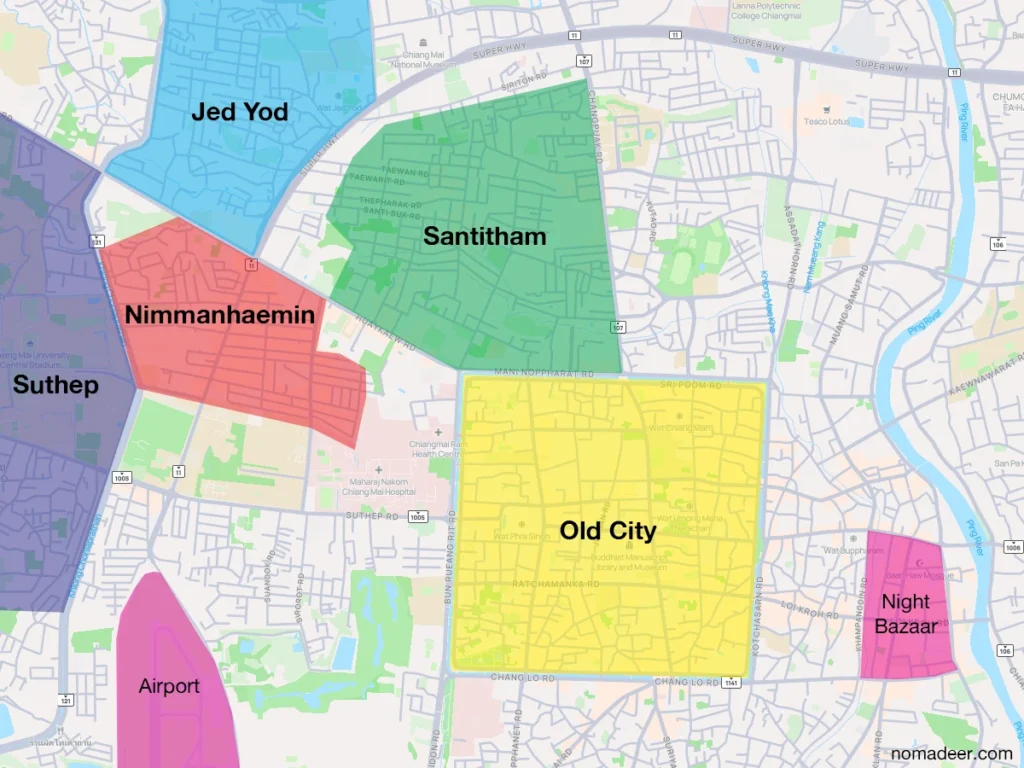
If you prefer a riverside hotel, a quieter residential location or an apartment near Chiang Mai University, there are several other areas to compare. Read our full guide to where to stay in Chiang Mai for a neighborhood-by-neighborhood comparison, accommodation advice and recommendations for different trip lengths.
| Area | Good choice if | Main tradeoff |
|---|---|---|
| Old City | You want temples, hostels and easy sightseeing | Tourist traffic and potential noise |
| Nimman | You work remotely and enjoy cafes and modern conveniences | Higher costs in popular locations |
| Santitham | You want local food and a practical longer-stay base | Less convenient for walking to tourist sights |
Getting Around Chiang Mai
Getting around Chiang Mai is straightforward for short trips, but the city does not have Bangkok’s metro or rail network. Your best transport option depends on where you stay, the weather and how far you want to travel.

Walking works well for exploring much of the Old City, although the heat and traffic make it less pleasant at certain times of day. For longer journeys, red shared pickup trucks called songthaews are a common local option. Confirm your destination and fare with the driver before getting in.
Grab and other app-based transport services are useful if you prefer knowing the fare in advance or need a direct ride to the airport. Prices depend on demand, distance and vehicle availability.

Should You Rent a Scooter?
A scooter gives experienced riders flexibility, particularly when staying outside the center or visiting places that are harder to reach by shared transport. However, Chiang Mai’s roads are not a suitable place to learn to ride. Traffic, unfamiliar road conditions and accidents are serious considerations.
You need the appropriate motorcycle license and any required international driving permit. Check that your travel insurance covers your vehicle and riding circumstances. Read our guide to renting scooters in Chiang Mai for more about choosing a rental shop, checking the bike and understanding the practical risks.
What to Do in Chiang Mai Without Overplanning
You do not need to fill every day with organized tours. Chiang Mai works particularly well when you combine a few planned activities with time to explore local food, markets and neighborhoods.
Temples, Markets and Northern Thai Food
Start with Wat Chedi Luang and Wat Phra Singh in the Old City. Both are easy to include in a walking itinerary, and visiting them gives you an introduction to Chiang Mai’s history and Buddhist traditions. Dress respectfully, follow posted instructions and check current visiting arrangements.
For food, try khao soi, northern Thailand’s coconut curry noodle dish, as well as sai ua sausage and other regional dishes. Local markets and small restaurants are often good places to explore without spending much. A cooking class is worth considering if you want to learn how the dishes are made rather than simply tasting them.
The Sunday Walking Street and Chiang Mai Night Bazaar offer different evening experiences. The Sunday market is particularly convenient if you are staying in the Old City, while the Night Bazaar area works for an evening of food, shopping and exploring.
Mountain Trips and Evening Activities
Wat Phra That Doi Suthep is one of the most practical trips from central Chiang Mai. The mountain temple provides a change of scenery and can be visited without committing to an entire day of organized activities. Check the weather and air quality before going.
If you have an extra day, consider Doi Inthanon National Park for mountain scenery and walking trails. Allow for the journey, changing mountain weather and any current park restrictions. A private driver or organized tour may be more convenient than renting a vehicle.
For an evening activity beyond the markets, watching Muay Thai is another option. Our Chiang Mai Muay Thai guide explains the differences between local stadiums and tourist-oriented venues.
If you are considering an elephant experience, research the operator carefully. Avoid venues offering elephant riding or performances, and do not assume that every business calling itself a sanctuary has strong animal welfare standards.
Digital Nomad Life, Safety and Practical Planning
Chiang Mai is a well-established remote-work destination, but an easy holiday does not automatically translate into a productive working month. Accommodation noise, desk comfort, reliable internet and the location of your workspace all matter.
Internet, Coworking and Finding a Routine
Nimman has a concentration of cafes and work-oriented spaces, while the Old City and Santitham have alternatives. Test your accommodation’s Wi-Fi before relying on it for important calls. A local SIM or eSIM with mobile data gives you a useful backup.

If you work full-time, consider paying for a dedicated coworking space rather than spending every day in cafes. Check opening hours, call policies, desk comfort and internet reliability before buying a longer membership. Look for language exchanges, coworking events, gyms or hobby groups if you want to meet people outside your accommodation.
Chiang Mai also works as a starting point for a wider remote-work trip. For ideas beyond Thailand, see our guide to digital nomad destinations, which compares different places based on budget, lifestyle and practical working conditions.
Visas and Entry Requirements
Do not assume that a tourist entry permission automatically covers remote work or that every nationality receives the same permitted stay. Thailand revised its tourist visa exemption arrangements in September 2026, and the rules depend on your passport and purpose of travel. Remote workers may also want to investigate the Destination Thailand Visa.
Before booking a long stay, check the Thai government’s September 2026 entry-rule announcement and confirm your personal requirements with an official Thai embassy or consulate. Check any digital arrival requirements as well.
Safety, Air Quality and Travel Insurance
Road traffic is one of the main practical risks to plan around. Wear a helmet on motorcycles, avoid riding without the correct license and never assume basic travel insurance covers scooter accidents. Be careful when crossing major roads, even when a crossing is marked.
During smoky season, check PM2.5 readings regularly using Thailand’s Air4Thai service or another reliable air-quality monitor. On heavily polluted days, reduce outdoor exercise and consider well-filtered indoor spaces. Travelers with respiratory conditions should plan particularly carefully and seek medical advice where appropriate.
For everyday travel, keep an eye on your belongings in crowded markets, agree on transport prices before setting off and avoid leaving your passport as security for a rental vehicle. Carry suitable insurance for your activities, check your accommodation location and keep some emergency cash available.
Quick Chiang Mai Planning Checklist
- Choose your travel dates with seasonal smoke, heat and rain in mind.
- Book the Old City for convenient sightseeing, Nimman for work-oriented routines or Santitham for a practical longer stay.
- Allow three to five days for a first visit, or longer if you want day trips and a slower pace.
- Check your passport’s current visa and entry requirements.
- Arrange airport transport or confirm your late-arrival check-in details.
- Check internet quality and workspace options before booking a long stay.
- Get appropriate travel insurance and verify motorcycle coverage if you plan to ride.
- Leave some free time for markets, local restaurants and unplanned activities.
FAQ
How many days do you need in Chiang Mai?
Three to five days in Chiang Mai is enough for a first visit covering the Old City, major temples, markets and a mountain day trip. Allow a week if you want to move slowly, take a cooking class or explore more of the surrounding countryside.
What is the best time to visit Chiang Mai?
The best time to visit Chiang Mai for most first-time travelers is generally November to January, when conditions are cooler and usually drier. February to April can bring severe air pollution, while the rainy season offers greener landscapes and potentially lower accommodation prices.
Is Chiang Mai expensive for backpackers?
Chiang Mai is relatively affordable for backpackers who use hostels, eat local food and choose inexpensive transport. A rough starting budget is 800 to 1,200 THB per day, although tours, nightlife and private rooms can increase your spending.
Where should digital nomads stay in Chiang Mai?
Digital nomads in Chiang Mai often choose Nimman for its cafes, workspaces and convenient daily routine, while Santitham can offer a more residential alternative. The Old City suits remote workers who prioritize walkability, sightseeing and meeting short-term travelers.
Can you visit Chiang Mai without renting a scooter?
Yes, you can visit Chiang Mai without renting a scooter by staying centrally and using walking, songthaews, ride-hailing apps and organized transport for longer trips. Renting a scooter is not necessary for seeing the main attractions.
Is Chiang Mai worth visiting during burning season?
Visiting Chiang Mai during burning season requires flexibility because PM2.5 pollution can make outdoor sightseeing uncomfortable or unhealthy. If you can choose your dates, the cooler months before the main smoke period are generally a safer planning option. If you must travel during February to April, monitor air quality and have alternative plans.