

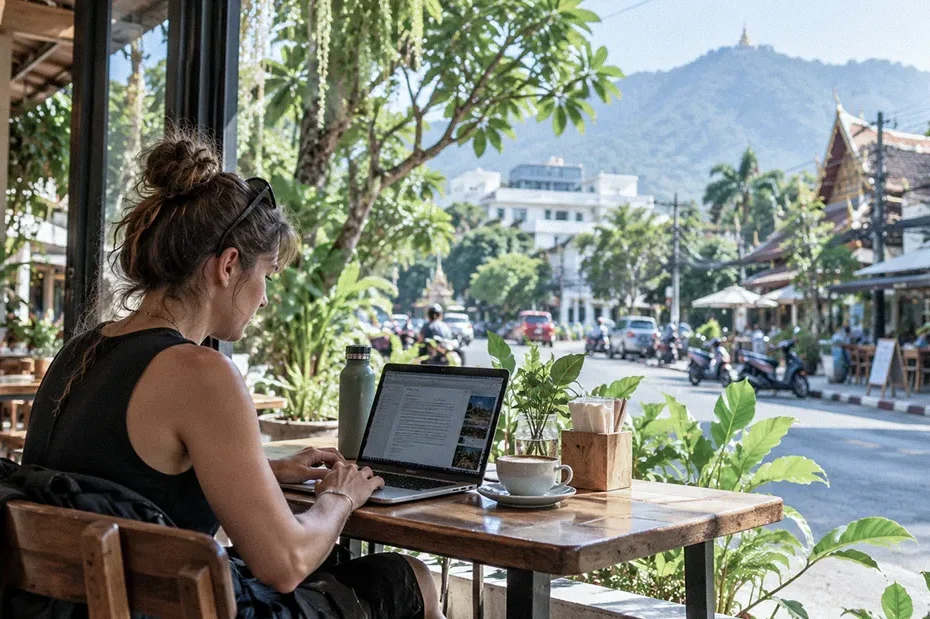
Chiang Mai still makes a strong case for remote workers in 2026, but the old formula of cheap rent, endless cafes and easy tourist stays needs updating. Your neighborhood, visa route, workspace and travel dates now matter as much as the headline cost of living.
Chiang Mai Digital Nomad Life in 2026: Why It Still Works
Chiang Mai has been a digital nomad base for long enough that the infrastructure no longer feels experimental. You can find furnished monthly accommodation, dedicated coworking spaces, laptop-friendly cafes, reliable mobile data, gyms, international food and a large population of people staying for weeks or months rather than a weekend.
The city also makes it fairly easy to build a routine. You can live near your workspace, eat locally without spending much, meet other remote workers and still have mountains, temples and northern Thai food nearby when the laptop closes. For general sightseeing, short-stay costs and trip planning, use our Chiang Mai travel guide rather than treating a working month like an extended holiday.
The catch is that Chiang Mai is not automatically a good fit for every nomad. Smoke can become a serious problem late in the dry season. Nimman can feel busy, polished and expensive compared with nearby neighborhoods. Cafe working gets uncomfortable if you spend eight hours a day on calls. Visa rules also deserve more attention than they did when many older nomad guides were written.
- Good choice if: you want affordable long-stay living, plenty of workspaces and an established remote-worker community.
- Skip it if: clean air from February through April is essential, you need a major-city business environment or you strongly prefer beach life.
- Worth it if: you plan around the season and choose your neighborhood around your working routine rather than tourist attractions.
Chiang Mai Digital Nomad Cost of Living: A Realistic Monthly Budget
A useful 2026 planning range for one digital nomad is roughly 30,000 to 50,000 THB per month. You can spend less with a simple apartment, local food and home working. You can easily spend more if you rent a newer Nimman condo, use coworking every day, order Western food regularly and take frequent Grab rides.
Current crowd-sourced cost data puts a one-bedroom apartment in central Chiang Mai at around 16,000 THB per month on average, while less central accommodation is closer to 10,000 THB. Asking rents vary widely by building, lease length and neighborhood, so a practical nomad budget should use a range rather than one headline number.
| Monthly expense | Useful planning range | What changes it |
| Furnished room or one-bedroom | 9,000 to 20,000+ THB | Nimman premium, lease length, building age, pool and gym |
| Food and groceries | 8,000 to 15,000 THB | Local Thai meals versus imported groceries and international restaurants |
| Coworking | 0 to 6,000 THB | Home working, cafes, day passes or full membership |
| Utilities, mobile data and internet | 1,500 to 3,500 THB | Air conditioning use and what your rent includes |
| Local transport | 1,500 to 5,500 THB | Walking, ride-hailing or monthly scooter rental |
| Gym, social life and extras | 3,000 to 8,000+ THB | Lifestyle, nightlife, classes and weekend trips |
Do not judge an apartment on rent alone. Ask how electricity is billed, whether internet is included, whether there is a usable desk and whether the building is quiet enough for calls. A cheap apartment that requires two paid rides every working day can be worse value than a slightly more expensive place beside your coworking space.
Best area to stay in Chiang Mai as a digital nomad
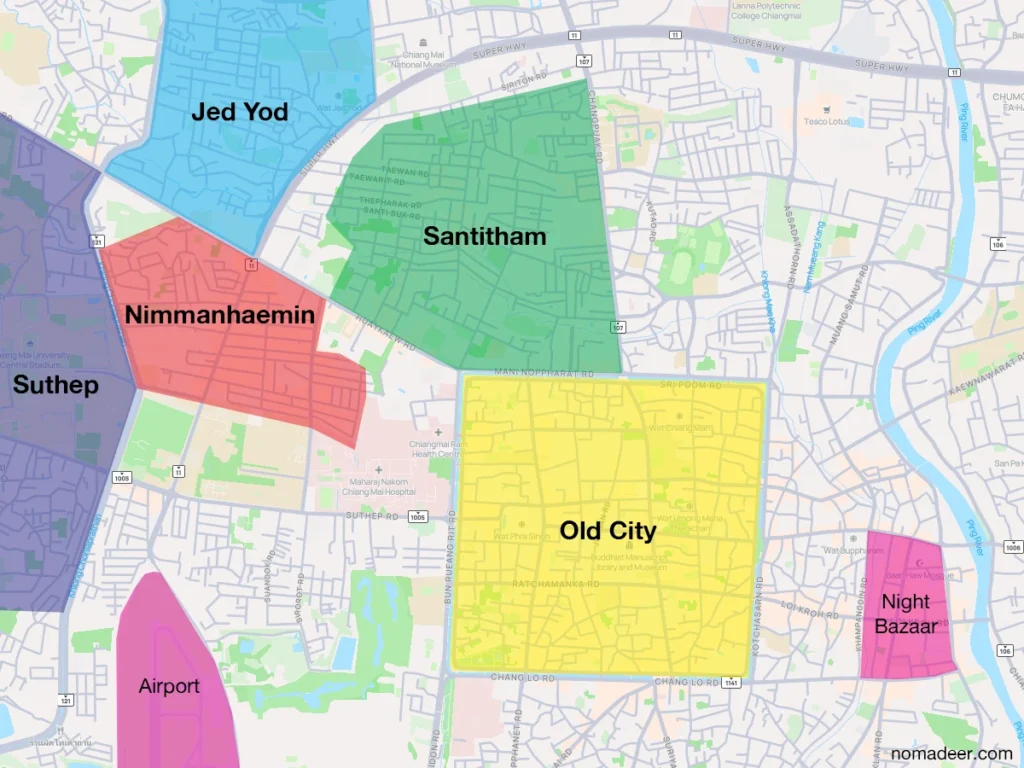
Nimman is the easiest first choice if you want cafes, coworking, gyms, restaurants and modern condos within a compact area. You pay for that convenience. Traffic around the main roads can be tiring, some streets are noisy and aircraft noise affects parts of the neighborhood.
Santitham is often the better value choice for longer stays. It sits between Nimman and the northern side of the Old City, has plenty of local food and can offer lower rents without putting you far from the main nomad areas. The tradeoff is that your favorite workspace or gym may require a short ride.
The Old City works well for nomads who prioritize walkability, local atmosphere and access to guesthouses and cafes. It is less concentrated around purpose-built remote-work infrastructure than Nimman, but established coworking options are available. For a fuller comparison of Nimman, Santitham, Old City, Riverside and other areas, see our guide to where to stay in Chiang Mai.
Visas and Long-Stay Options for Remote Workers
Visa advice needs extra care in 2026 because Thailand changed its entry arrangements in September. From 15 September 2026, the previous broad 60-day visa exemption ended. Eligible travelers from 60 countries and territories can now receive up to 30 days visa-free for tourism. Your nationality and reason for entering still determine which arrangement applies.
A standard Tourist Visa remains another option for eligible visitors and normally allows a stay of up to 60 days for tourism. Do not assume that a tourist entry or tourist visa is automatically permission to work remotely. Thai embassy guidance describes tourist visas as being for tourism purposes.
For remote workers, the most relevant long-stay route is the Destination Thailand Visa, or DTV. Thailand introduced it specifically for categories that include digital nomads, remote workers and freelancers. Official guidance describes it as a five-year multiple-entry visa allowing stays of up to 180 days per entry. The published requirements include proof of purpose and financial evidence of at least 500,000 THB. Check the official Destination Thailand Visa guidance and your responsible Thai embassy before applying, because supporting documents and application procedures can vary.
Thailand also has education visas, but an ED visa is for genuine study or training. It should not be treated as a generic digital nomad workaround. If your main reason for being in Thailand is remote work, compare the DTV and other appropriate visa categories rather than enrolling in a course simply to extend your stay.
Here is the simple version: decide how long you actually want to stay before booking accommodation. A one-month trial, a three-month season and a six-month base create very different visa and rental decisions.
Coworking Spaces Chiang Mai Nomads Can Use, Plus Connectivity
Chiang Mai gives you more choice than simply working from coffee shops. That matters if your job involves video calls, a second monitor, long focused sessions or confidential conversations.
| Workspace | Area | Good choice if |
| Yellow Coworking | Nimman | You want a social coworking environment close to the main nomad district |
| Punspace | Old City | You want a dedicated workspace with established facilities and member access outside normal office hours |
| Alt_ | Old City and Ping River | You like coworking combined with coliving and organized community activity |
| C.A.M.P. | MAYA, near Nimman | You want a casual cafe-style workspace rather than a conventional office |
Check current prices, opening hours and call policies before buying a membership. Workspace details change faster than neighborhood advice. A place that is great for quiet coding may be a poor choice for someone spending half the day in meetings.
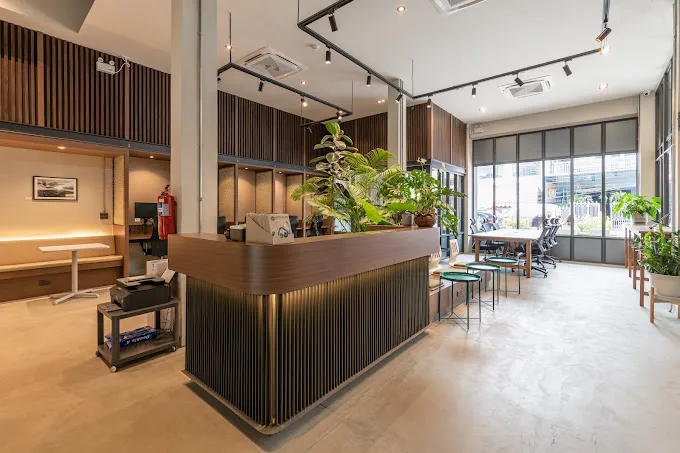
Cafes are useful for shorter sessions, but relying on them five days a week has downsides. Seating is not designed for full workdays, power sockets can be limited, music gets tiring and taking long calls beside other customers is rarely ideal. Paying for a proper desk can be worth it even when free Wi-Fi is everywhere.
Internet, eSIMs and backup connectivity
Internet is generally one of Chiang Mai’s easier remote-work problems, but never assume that a good citywide reputation guarantees good Wi-Fi in your apartment. Ask the landlord or hotel what connection the room actually uses. If calls are important, run a speed test before committing to a long lease.
Keep mobile data as a backup. AIS and True-dtac have extensive Thai mobile networks, and tourist SIM or eSIM packages are easy to arrange. For a multi-month stay, compare local prepaid packages after arrival instead of automatically renewing an expensive short-term tourist package. Just bring your phone and passport to one of the malls to find efficient service in setting up your phone.
A simple setup is enough for most people: reliable apartment internet, a coworking option for important workdays and enough mobile data to hotspot through an outage. That redundancy matters more than chasing impressive speed-test numbers.
Getting Around Chiang Mai When You Work Remotely
Where you live determines how much transport matters. Central Nimman can support a mostly walkable routine if your apartment, coworking space, gym and regular restaurants are close together. Old City is also manageable without your own vehicle. Santitham and more residential areas become easier if you are comfortable making short rides.
Ride-hailing works well for occasional trips, but repeated rides across town can slowly erase the savings from cheaper rent. A scooter gives experienced riders more independence and can make longer stays easier. It also brings licensing, road-safety and insurance issues that should not be treated casually.
If you plan to rent one, basic monthly scooters often cost several thousand baht rather than the daily tourist rate multiplied by 30. Read our detailed guide to renting scooters in Chiang Mai before choosing a bike. Chiang Mai traffic is not a good place to learn from scratch.
Your daily routine matters more than sightseeing distance. A productive setup might be an apartment five minutes from your desk, a gym and two or three reliable food options. That can be more useful during a working month than living beside a famous temple and commuting every morning.
Best Time for a Chiang Mai Digital Nomad Stay
November to January is the easiest period for many remote workers. Temperatures are generally more comfortable, conditions are usually drier and the severe haze associated with the later dry season is less likely. The downside is stronger visitor demand and potentially higher accommodation prices.

February to April deserves serious consideration before you book several months. Chiang Mai and the wider north experience a recurring haze season associated with fires, biomass burning and weather conditions that trap pollution in the region. Research using long-term pollution data shows a pronounced February to April pattern. Conditions vary from year to year, but 2026 again produced periods of hazardous PM2.5 in Northern Thailand.
If you are sensitive to air pollution, enjoy outdoor running or expect to spend your weekends hiking, planning a Chiang Mai base for March can be a poor trade. Indoor air filters and N95 masks help manage exposure, but they do not turn a bad air-quality week into a normal mountain-city experience.
May to October brings rain and more humidity, but it can be a good long-stay window for nomads who do not mind tropical downpours. The landscape is greener, air quality is usually less dominated by seasonal smoke and accommodation demand may be softer than in the cool season. Rain does not necessarily mean losing the whole working day.
Is Chiang Mai still worth it for digital nomads in 2026?
Chiang Mai is still worth considering in 2026 because the combination of manageable living costs, established coworking, easy food, long-stay accommodation and remote-worker community remains difficult to match. What has changed is that you need to plan more deliberately.
Do not come only because an old blog post promised a $600 lifestyle. Do not book three months in Nimman before checking whether you actually like the area. Do not ignore February and March air quality. And do not build a six-month stay around a tourist-entry assumption without checking the visa that fits what you are doing.
If you want a beach and a more open coastal lifestyle, Da Nang is an obvious Southeast Asian comparison. If you want a compact inland city where setting up a productive routine is easy, Chiang Mai still has a strong case.
FAQ
Is Chiang Mai good for digital nomads in 2026?
Chiang Mai is good for digital nomads in 2026 if you value affordable long-stay living, coworking, cafes and an established remote-work community. The main tradeoffs are seasonal air pollution, changing visa rules, traffic and the higher cost of popular areas such as Nimman.
How much does it cost to live in Chiang Mai as a digital nomad?
It costs roughly 30,000 to 50,000 THB per month to live in Chiang Mai as a digital nomad with a private room or apartment and a normal remote-worker lifestyle. A simple local setup can cost less, while newer Nimman accommodation, frequent international food, coworking and nightlife can push the total above 50,000 THB.
What is the best area to stay in Chiang Mai for a digital nomad?
The best area to stay in Chiang Mai for a digital nomad is often Nimman for maximum convenience or Santitham for a better balance of cost and central location. Old City can suit nomads who prefer walkability and a more historic setting, while quieter outer areas work better if you have your own transport.
Does Chiang Mai have good coworking spaces?
Chiang Mai has good coworking spaces across Nimman, the Old City and the Ping River area. Yellow, Punspace and Alt_ are established options, while C.A.M.P. offers a more casual cafe-style environment near Nimman.
What visa should a digital nomad use in Chiang Mai?
The visa a digital nomad should use in Chiang Mai depends on nationality, length of stay and purpose, but the Destination Thailand Visa is the Thai visa category specifically designed to include remote workers, freelancers and digital nomads. Tourist and education routes have different purposes, so check current official requirements before arranging a long stay.
When should digital nomads avoid Chiang Mai?
Digital nomads should consider avoiding Chiang Mai during the February to April haze period if clean air and outdoor activity are priorities. The exact timing varies each year, but March and early April can experience severe PM2.5 pollution, so check current conditions before committing to a long rental.